Thursday, August 23, 2018

What the Meaning of the Word "is" is

Taking Spanish #1 9 times, I remember learning how to conjugate "to be."  At no point did I ever connect that in English "to be" is a version of "is."  It was a huge breakthrough for me.  I told Walter about that, and he suggested I write about that.  I told him I didn't think I could write a whole blog post about that particular revelation.

He explained to me that "being" is an important philosophical concept.  And the fact that I have been throwing around this important concept under the guise of "is" and "are" is huge.  Learning about that should teach me something about myself.  I told him I would give that some thought.  Now that I have... I got nothing.

So, let me tell you about...
Spanish is Easy...ier #3

News in Slow Spanish.  It's a podcast where they read the news... slowly... in Spanish; only using the present tense.  It's amazing for an adult trying to learn Spanish.  A lot of people start with children's programming because it's easy.  It's like that, but relevant to my interests, which helps a lot.

And it comes with a transcript.  I'm thinking I can listen through it once, then use the puzzle method on the transcript, then listen to it again.  The puzzle method I described last time.  It's basically just manually translating something word for word, then doing my best to translate the meaning of it.  I liked their free trial enough to pay $40 for 6 months of their service.

Thursday, August 16, 2018

An Apple a Day

"it works with the iPad Pro, and nothing else"

My blog partner, Benjamin, has written about getting an iPad Pro, and raved about it personally to me. My sister-in-law and her husband were here for a couple weeks earlier this year and they each had one. Ellie and I experienced similar raving from them. And, of course, we saw and experienced the amazing display and saw how snappy the whole thing was.


"Gee, those are nice," Ellie sighed. "Big, clear, bright. Fast."


"Yes, but do we really need another computing device here?" I asked.


"Well, no, of course not."


She was, and remains, as aware as I am that we have had our share of techie electronic gear. Plus, we are seriously thinking about moving, which means downsizing rather than upsizing our "stuff" inventory. Adding a couple of iPads would not mean adding much to move, of course, but, still, if it's not necessary ... however, none of our computing power was built by Apple.


"You know, a lot of what I like to read on my phone is hard to read, it's so small. I'd sure like to see what that would be like on an iPad," she persisted.


Enter "Score More Rewards," the loyalty program for our credit card.


"Shop your Rewards," the email said. "Click here to see how many reward points you have."


We had had the card for many years, used it a great deal, and rarely checked the. Curious, I clicked on the link and found that we had lots of points. "Boy, honey, we're rich!" I exclaimed when I saw the point total. I had already begun scrolling through the catalogue to see if they had anything we couldn't possibly live without, which I doubted.


"Think they have iPads?" Ellie asked.


"Well, I haven't seen any … haven't really been looking, either. They do have technology stuff, though," I replied.


"Why don't you check?" she said, insightful woman that she is.


I did … and I found an iPad Pro, several of them. Their cost varied depending on screen size, whether they offered a cellular connection and the amount of memory. They were among the items commanding the most points in the catalogue. Neither Ellie nor I would consider getting only one. The cheapest iPad Pro was close to our total Reward Points budget; two of them was out of the question.


"What other tablets do they have," we both wondered, aloud, simultaneously. While searching for an answer to that question, I came upon an iPad whose price was less than half our total budget … clearly two of these were a possibility for us. There was not a technical description of the device ( remember, I'm a techie ), but it did say WiFi or Cellular, 32 GB, 9" screen or so.


"I want one of those," Ellie decided. "It might not have all the bells and whistles of an iPad Pro, but it's an iPad and I'd like to experience one. What do you think?" She paused, then landed, "It's not like we're spending a lot of cash!"


Two of them, Gold and Midnight Black, came less than two weeks after we ordered them. They are sweet. We are in love with them. Compared to our fairly up to date smartphones, which have become our mainstay computing devices, they are faster, possess bigger and brighter screens, and are generally more responsive.


"Oh, an iPad Pencil!" I thought. My last smartphone was a Samsung Note, with an S-pen, and I still mourn the loss of that S-Pen when getting my current phone. I re-experienced that magic when Benjamin let me try his iPad Pro with the Apple Pencil. They worked gloriously together. I wondered if that Pencil would work with my newly acquired iPad.


Wanting to surprise Benjamin with my iPad, but wanting to try his pencil with it, I wrote him a cryptic request prior to our having dinner the next time we were scheduled: "Please bring your Apple Pencil to dinner next week."


His reply: "I carry my iPad Pro and the Pencil with me pretty much wherever I go, so you did not really need to make your request. Just so you know, it works with the iPad Pro, and nothing else."


I was heartbroken.

If you would like to comment but don't care to use the comment field, send an email to  wrjsojourner@gmail.com.

Monday, August 6, 2018

100 Push Ups #2

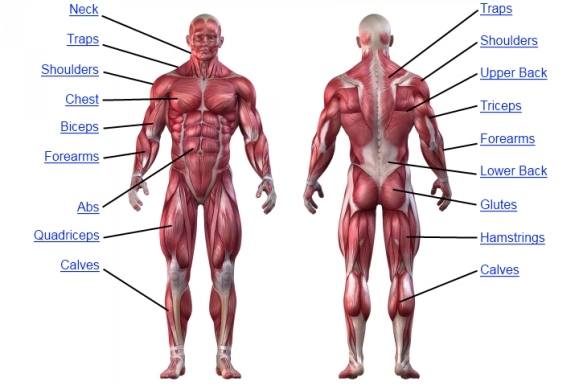
The plan was 100 push ups, and that is a fine plan.  I was doing that for a while; 100 vanilla push ups.  Then I branched out into doing half of my push ups near the center of my chest, and varying the angle as I went.  I lowered the total number of push ups at that time, planning to work my way back up to 100.  The funny thing that happened along the way was an odd type of success.  I started developing muscles, but in a slightly odd proportion.

 This is probably really obvious to anyone into fitness, as most people do a variety of exercises for a reason.  But I'm still learning.  So, my legs are fine.  I do walk more than most.  My forearms are actually fine too, developing a little during my time in pizza.  The current issue that is only starting to develop is that my biceps and chest are starting to look out of proportion to my triceps and shoulders.  So a little research, and it looks like the exercises I'm looking for are pull ups and chin ups.

There are actually a huge variation of pull ups and chin ups, depending on where you are gripping, the position of your legs, and even the muscles you use to pull yourself up.  Figuring out which ones are right for me will a step, but not the next step.  Step 1 was buying the pull up bar, which will be here in a couple days.  Step 2 will be negative pull ups, because I can't actually do a pull up yet.  A negative pull up is like a pull up, but where you only lower yourself.

It looks to me like push ups and pull ups can work every muscle from your glutes on up.  So I'll will continue to do push ups, but I'll probably never return to 100 a day again.  Partially because I don't want to spend more than 10 minutes per day exercising, and partially because I don't want giant muscles.  The push ups I do might be deep push ups, since that is another use of the pull up bar I bought.

Which brings me to learning the ways of the hoop.  That was where I bought a children's hula hoop, and failed to learn how to use it.  That was supposed to work all of my core muscles.  Step 2 was where I bought an adult's weighted hula hoop... and failed to learn how to use it.  My rhythm sucks.  The extra weight came with extra momentum, and it also had a little more grip.  None of that seemed to help.  I've heard gaffer's tape is one more thing I can try for even more grip, but I think I'm gonna put that on hold.  Maybe I can find a teacher one day.


Thursday, August 2, 2018

Red, Blue? Conservative, Liberal? Democrat, Republican? No Labels!

The No Labels organization, of which I am a member and of which I have spoken before, in conjunction with the Problem Solvers' Caucus in the US House, released a significant initiative designed to break the partisan logjam in Congress. I am committed to helping, and, in so doing, I've written to a TV station that is getting the candidates' positions on various issues, asking them to find out their position on this initiative. Another thing I planned to do is write a letter to the editor, but I made it too wordy for a simple letter. It's long enough to be a commentary and looks something like this:


The U.S. Congress has become, or seemed to become, completely dysfunctional. The Republicans are in charge and the sole thing they've managed to do is enact a tax cut for the very top of the economic class. In the prior administration, the Democrats still resorted to, for example, passing the Affordable Care Act in such a way as to shut out the Republicans. Virtually no legislation makes it to the floor with broad ( i.e.,
bipartisan ) support.


Do you ever wonder why?

A significant contributor is the rules governing the House of Representatives. These rules make it virtually impossible for bipartisan legislation to make it to the floor. And, each time these rules are considered, members rubber-stamp them for the coming session.

Two rules stand out …

Members of the Tea Party, several years back, ( re ) discovered an old House Rule (  the "motion to vacate" rule ) that allows any individual member of the House to call a vote of no confidence in the House Speaker. Any. Individual. Member. No speaker wants to face such a vote. The practical effect of this rule is that no bipartisan legislation, however popular, has a chance for consideration

Another significant problem is the ability of the Speaker to control which legislation is considered using "Regular Order" and which not. ( You might recall Senator John McCain complaining about the failure to use Regular Order at the time of his NO vote on the repeal of the Affordable Care Act in 2017.  ) When Regular Order is used, ordinary members of the House can suggest amendments, debate the merits of the bill, and hearings can be called. Almost no legislation today is considered using Regular Order.

A bipartisan group called No Labels was born ten years ago. It spawned a recognized caucus in the US House, the Problem Solvers' Caucus. This caucus, its history, constituent members, and rules are beyond the scope of this letter. Suffice to say it is made up of approximately 40 members from both parties, and is committed to addressing the problems faced by the U.S.

The caucus proposes a set of House Rules changes aimed at the problems mentioned as well as others. The House considers its rules right after the mid-terms and the caucus's changes could be made then.

I urge everyone who considers voting for members of the House of Representatives to be aware of the Problem Solvers' Caucus initiative, to educate themselves and other voters about it, and, especially, to tell all candidates for the House that your vote is contingent on their backing the proposed changes.

The No Labels web site has details of all this, see https://tinyurl.com/yarncrrl.


Comments?
If you would like to comment but don't care to use the comment field, send an email to  wrjsojourner@gmail.com.


Wednesday, July 25, 2018

Spanish is Easy...ier #2

This is just a boring update to my efforts to learn Spanish because all I've done in the past week is to try to learn Spanish.

The Rosetta Stone and Anki have been going great, but that's not even half the battle.  I'm still looking for the right source to "teach me" the grammar.  One interesting source is a guy who teaches what he calls Gringo Espanol.

He has an interesting approach.  For example, in English, you wouldn't say, "I eated the apple."  That's because "Eat" is an irregular verb.  But the thing is, if you did say, "I eated the apple," you would be understood %100 of the time.  He says that's pretty much true in Spanish as well.  So learning irregular verbs should be your very last step.  Learn enough Spanish to start speaking it poorly, then worry about not sounding like an idiot. 

Do you see why he calls his channel Gringo Espanol?  He talks about children, and says they're not better at the skills it takes to learn a language, or the memorization involved.  They're great at learning languages because they jump right in, and aren't afraid to make mistakes.

He has also explained what he calls the Puzzle Method.  That's where you look at a something written in Spanish; something you might be interested in.  Then start translating each word manually.  This part is easy, anyone can do it.  The hard part is the grammar.  The interesting part is, if you know the words, and understand the subject, you can usually figure out what they are trying to say.  That way you are figuring out the grammar, and learning how it works as you do.

He's a weirdo, but so am I, and he has some good videos on Youtube.  He has some more stuff behind a pay wall, and I am thinking about it.  I'm sure I'm describing his thoughts poorly.  If you're a native English speaker trying to learn Spanish, I definitely recommend checking him out.

Friday, July 20, 2018

I Can Hear you Now

"What, I'm sorry … what did you say?"

Ellie, my sweetheart and the love of my life, and I spend a lot of time in our den. We are perched, each of us, on a lift chair, controlled by pushing buttons on a wired remote control. Pushing the right button for long enough will practically stand the occupant up and push him/her out of the seat. Similarly, pushing a different button long enough will lay the chair flat, perhaps even making the head slightly lower than the feet, inviting the occupant to nap.

Ellie's arthritis had bothered her enough that the simple act of getting out of a chair became difficult. This persuaded us to look for a lift chair to ease the difficulty. When we found one, I, of course, became jealous, so we got two of them. We now have His and Hers chairs, as I, noticeably taller than she, need a bigger chair.

Pretty independent of one another, we read, watch TV and use our smartphones. We play competitive games on the phones ( against each other, against others ), games of skill against the phone, and almost always at least several brain games at the same time ( these pit us against the material, but we do them at the same time ). There's plenty of interaction and there's plenty of quiet time as well. 


Ellie would commonly punctuate this time my going to the kitchen to perform some cat-spoiling activity. It was during these times that the issue began rearing its head.

"Honey, did I leave my water bottle in the den?" she'd ask, as she was spooning some ocean whitefish from the can to the dish of one of the cats.

"Yes, it's here; do you want it?" I'd respond.

"No, just making sure I know where it is."

Every now and then, as she was running water to rinse the dinner plate belonging to one of the cats, she'd ask, "Honey, did I leave my coffee in the den?"

Having heard her voice but utterly failing to understand, I'd call back, consciously making myself heard above the running water, "What? Could you turn the water off and repeat the question, please?" Which of course, she did, and everything was cool.

Until it wasn't.

She'd frequently forget that running water drowned out her voice
( enjoying the pun ) and she began suggesting I wasn't hearing her adequately. It didn't help that, when we were both in the den, both enveloped in our individual activity, she'd ask something with no intro. "You know that play we were talking about? How did the homicidal maniac get into the bedroom without anyone noticing?"

I would not realize she was talking to me until about, "into the bedroom," by which time it was way too late to know the totality of what she had said. "What, I'm sorry … what did you say?"

It didn't help that I would frequently say something to her and she didn't hear it, either. She accused me of mumbling. ( And, truth be told, I do that more often that I'd like to admit. Perhaps way. ) And I noticed I heard things and asked her about them and she didn't hear them at all … like her shoes making odd squeaking noises on her desk-chair mat. I was sure I could hear better than she, she was sure I suffered from at least some hearing loss, and I was afraid that that was true.

"FREE HEARING SCREENING," the coupon said. "Let's go do this, both you and I," Ellie said.

We did. Guess what?

I do hear better than Ellie does, I do have some non-trivial hearing loss, and so does she. Our hearing loss is compatible with people our age, and I am now the proud owner of a set of hearing aids. As is Ellie. What a pair we make!

If you would like to comment but don't care to use the comment field, send an email to  wrjsojourner@gmail.com.

Wednesday, July 18, 2018

Spanish is Easy...ier

“Why do we fall? So we can learn to pick ourselves up.”

Is there anything superhero movies can't teach us?  When I returned from vacation I was ready to be productive again, so I dove into Spanish.  And I was ready to apply what I learned studying Japanese.  No, not what I learned about conjugating verbs.  I'm talking about what I learned about learning.

For starters, I'm back on Anki.  Anki is an amazing tool for simple memorization.  But this time I'm memorizing words, instead of alphabets.  I'm starting with a list of the 5,000 most used Spanish words, as compiled from movie subtitles.  Most of these are prepositions, conjunctions, and such.  In a few weeks I plan to add in common phrases.

Then there's Rosetta Stone.  I gave my Japanese subscription to my cousin, and got a Spanish subscription.  Last time I studied what it was teaching me, and that was all wrong.  I was doing one lesson a day, if that.  The benefit of the program is to make you practice it as often as you can.  It kind of simulates immersion, or as least the best you can without other people.  This time around I'm spending less time thinking it through, and more time doing it, and getting that practice in.

Most speaking is done subconsciously, and these two methods are great at that angle of a new language.  But I am 36, and it's too late to just absorb a language like a child would.  The third method I'm using is old fashion studying.  I'm watching youtube videos explaining how the grammar works, and taking notes.

I have some other ideas for the future, but this is a great start.  There is some commitment involved, but it's not pulling teeth.  It feels good to learn, and I'm still very enthusiastic.  Plus I am bundling my enthusiasm for my upcoming vacation with that studying.